
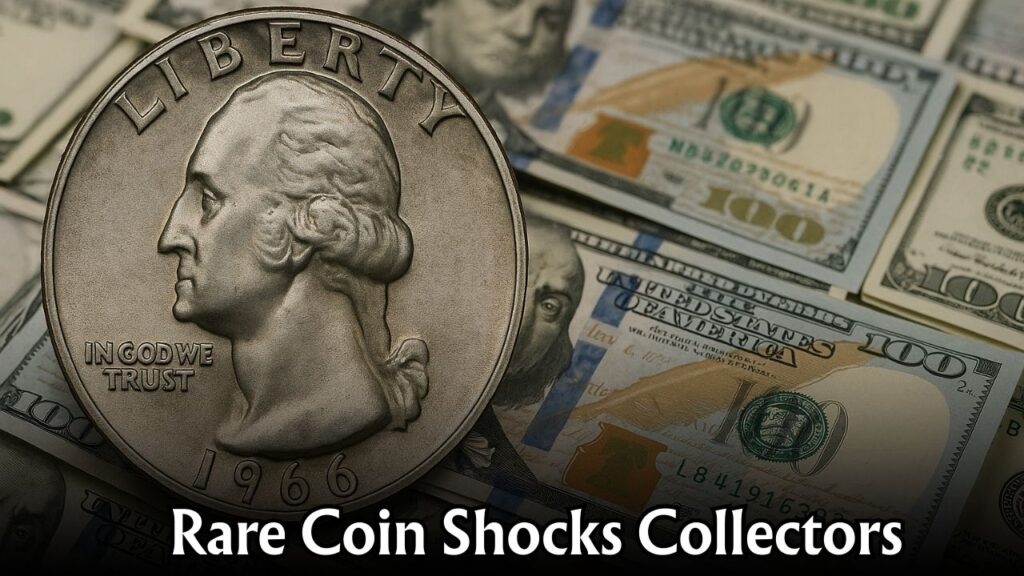
1966 Washington Quarter Value: The humble 1966 Washington quarter, often overlooked in spare change jars, might hold a value that will surprise many. While most quarters from this era circulate at face value, a few rare specimens could be worth a staggering amount. Numismatic enthusiasts and collectors alike are buzzing with excitement over the possibility of finding one of these coins, potentially valued at up to $20 million. The rarity and value of these quarters are not only tied to their age but also to their unique characteristics that make them stand out from the rest. This excitement stems from the specific minting errors and high-grade conditions that some of these coins possess, making them incredibly sought after in the coin collecting community.
How to Identify a Rare 1966 Washington Quarter
For those interested in finding out if their 1966 Washington quarter could be worth millions, it’s essential to understand what makes these coins valuable. The key factors that contribute to the rarity include minting errors, such as double die strikes or off-center prints, and the overall condition of the coin. Coins that have been preserved in pristine condition, showing minimal signs of wear or damage, are graded higher and are more valuable. Collectors often use a magnifying glass to inspect for these details, looking for subtle imperfections or variations. The Professional Coin Grading Service (PCGS) and the Numismatic Guaranty Corporation (NGC) are reputable organizations that can provide official grading and authentication services, which are crucial for establishing a coin’s true value. Some coins from this era are known for their unique silver content, which also adds to their desirability and potential value. So, if you come across a 1966 quarter, it might be worth taking a closer look.
The Market Demand for Rare Quarters
The numismatic market is continually evolving, with collectors and investors always on the lookout for unique and rare coins. The demand for rare 1966 Washington quarters has surged in recent years, driven by stories of high auction sales and increased interest in historical coins. Auction houses and online marketplaces are popular venues where these coins can fetch significant prices, sometimes reaching millions. The appeal of owning a piece of history, coupled with the potential for a high return on investment, makes these quarters highly sought after. A real-life example is the case of a similar rare quarter that was sold for an unprecedented amount at a major auction, sparking widespread interest and speculation about other valuable coins in circulation. As more collectors enter the market, the competition for these rare finds intensifies, driving prices even higher.
Real-Life Examples of High-Value Quarters
There have been notable instances where seemingly ordinary quarters have turned out to be extraordinarily valuable. One famous example involved a quarter that was mistakenly struck on a silver planchet instead of the usual copper-nickel clad, leading to a significant increase in its value. This rarity was discovered at a small auction where the coin’s unique characteristics were brought to light, resulting in a sale price that exceeded expectations. Another case involved a quarter with a rare minting error known as a “double die,” where the image appears doubled. This error is highly prized among collectors and can drastically increase a coin’s worth. These stories fuel the hope that anyone might stumble upon a valuable quarter in their collection, highlighting the importance of careful examination and expert assessment.
Steps to Evaluate Your Coin Collection
If you suspect that you have a valuable 1966 Washington quarter or any other potentially rare coins, there are several steps you can take to evaluate your collection. First, gather your coins and use a magnifying glass to inspect them for any unusual features or minting errors. Next, consider the overall condition of the coins; those that have been stored properly and show little wear are more likely to be valuable. It’s worth investing in a coin grading service to get a professional assessment of your coins’ quality and authenticity. Joining a local coin club or community can also provide valuable insights and resources, as experienced collectors often share tips and advice on identifying rare finds. Finally, keep an eye on coin auctions and sales to stay informed about market trends and potential opportunities to sell or expand your collection. By taking these steps, you might just discover that you have a hidden treasure in your possession.
