
Could a $1 Million Quarter Be Hiding in Your Change Jar: For most of us, a quarter is just a 25-cent piece, perfect for parking meters or gumball machines. But what if we told you that lurking among those mundane coins might be a treasure worth $1 million? It sounds like a scene from a movie, but rare quarters have fetched significant prices at auctions, turning everyday pocket change into potential fortune. This intriguing possibility has sparked a newfound interest in coin collecting, particularly in the United States, where rare coins have a history of surprising collectors with their unexpected values.
The Fascinating World of Rare Quarters
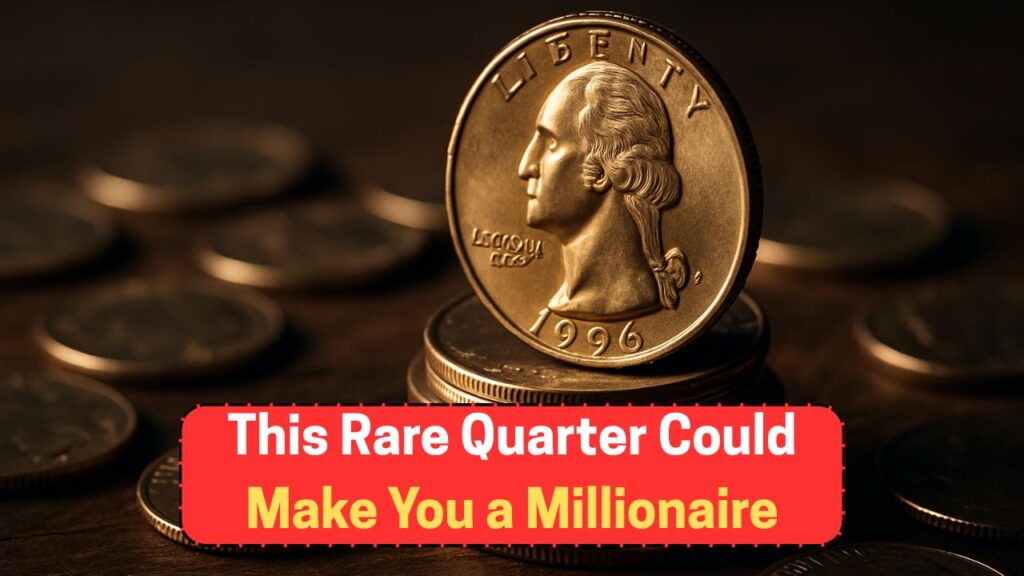
When it comes to rare coins, quarters often hold a special place in collectors’ hearts. The 1970-S Washington quarter, for instance, became famous when certain varieties were mistakenly struck on leftover Canadian quarter blanks, making them highly sought after. Similarly, the 1932-D and 1932-S quarters are known for their rarity and can fetch thousands of dollars. What makes these coins so valuable? It’s a combination of factors, including mintage errors, historical significance, and the condition of the coin itself. Collectors often look for unique characteristics such as doubling, misprints, or other anomalies that can drastically increase a coin’s worth. As a result, a seemingly ordinary quarter could potentially be worth a small fortune if it possesses one of these rare traits.
Spotting a Valuable Quarter in Your Collection
Identifying a rare quarter requires a keen eye and some research. Start by examining the coin closely for any unusual markings, errors, or minting irregularities. For instance, the 2004 Wisconsin state quarter is famous for its ‘extra leaf’ error, which can add hundreds of dollars to its value. Additionally, quarters from the early 20th century, especially those minted during the Great Depression, tend to be more valuable due to their limited production and historical context. Using a magnifying glass or a jeweler’s loupe can help reveal minute details that might be overlooked otherwise. It’s also beneficial to cross-reference your findings with reputable coin value guides or online databases to confirm any suspicions you might have about a coin’s rarity and potential market value.
Investing in Coin Collecting: A Hobby with Financial Perks
Coin collecting is more than just a hobby; it can be a lucrative investment. The numismatic market, which deals with the study and collection of currency, has seen significant growth, partly due to the fascination with rare coins like the potentially million-dollar quarters. Investing in coins requires knowledge and patience, but the rewards can be substantial. For instance, the 1913 Liberty Head nickel, a rare coin with only five known specimens, sold for millions at auction. Collectors and investors alike are drawn to the historical stories and unique features that each coin represents. By starting with a simple change jar, individuals can gradually build a collection that not only holds sentimental value but also the potential for financial gain.
Real Stories: Ordinary People Discovering Extraordinary Coins
Many stories circulate about everyday people stumbling upon rare coins in the most unexpected places. Take the case of an Illinois man who found a rare 1970-S quarter in his late father’s collection, which later sold for thousands. Or the story of a young collector in Texas who discovered a 1943 copper penny, once thought to be a myth, turning his modest collection into a substantial nest egg. These real-life examples highlight the excitement and potential windfall of finding a rare coin. The key takeaway is that with a little curiosity and attention to detail, anyone can unearth a hidden gem in their collection, transforming a simple hobby into a profitable venture.
